
Start with the exact component
Provide a part number or reference, vehicle application, drawing or physical sample where available. Photos alone may not distinguish visually similar components. Explain whether the requirement is for an existing replacement part or a custom-manufactured component.
Prepare the supplier brief
- Part identifiers, relevant vehicle models and fitment information.
- Drawings, dimensions, materials and surface-treatment requirements.
- Order quantities, labeling, packaging and destination.
- Required tests, traceability records and documentation.
Agree verification for the intended use
Braking, steering, suspension and other safety-related components require particular care. Supplier statements and product photographs are not substitutes for the engineering, testing and market requirements applicable to a specific component. Confirm the responsible technical reviewer, testing scope and required records before an order.
Keep samples tied to production specifications
Record which revision and reference sample were approved. Define which characteristics require inspection and how changes must be communicated. Where batch identification, material records or test reports are needed, specify them in the order rather than requesting them after production.
Review the commercial terms
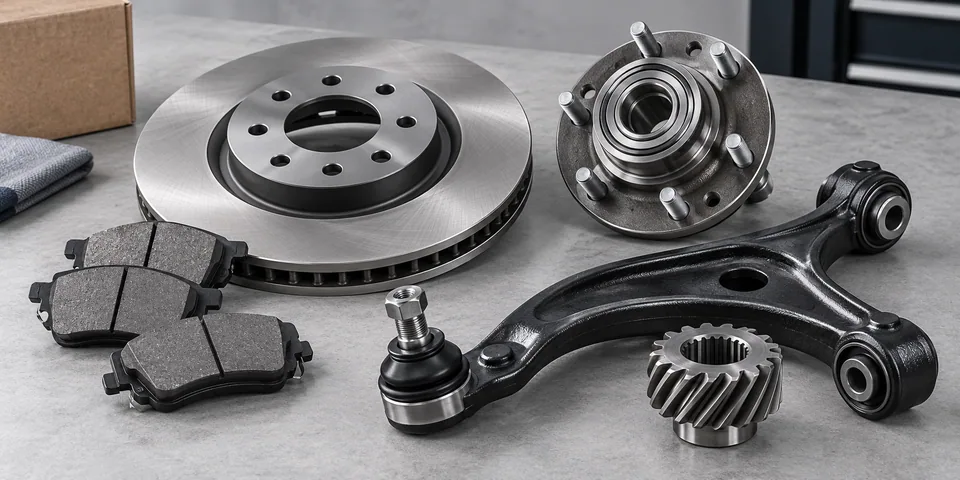
Clarify packaging, replacement terms, tooling ownership for custom parts and how nonconforming goods will be handled. The component images shown here illustrate a product category; they are not evidence of certification, stock or compatibility with a particular vehicle.